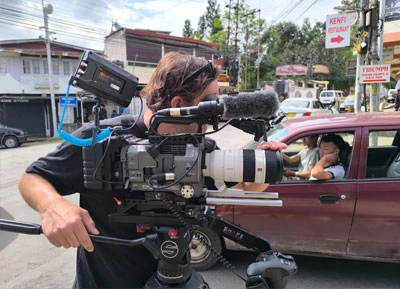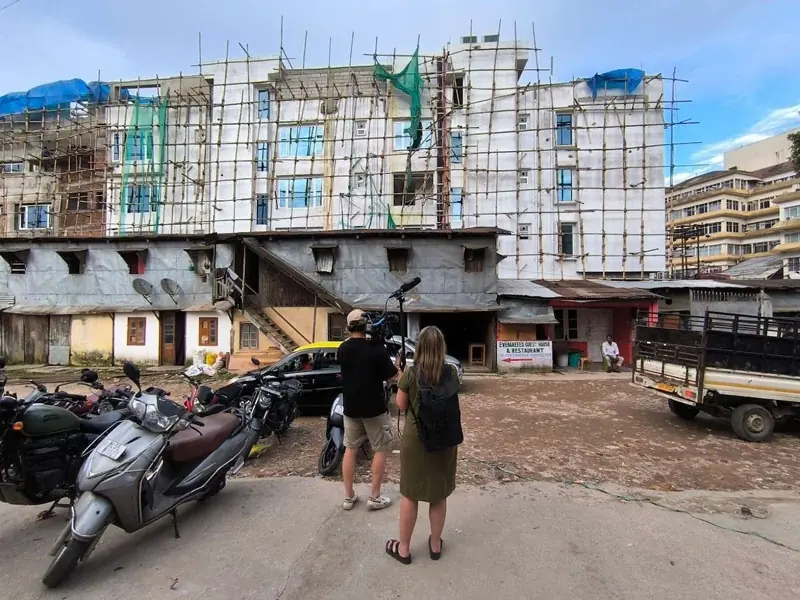
If you need a film fixer in the United Kingdom, the short answer is a local production partner who handles permissions, locations, crew and daily logistics for a shoot that is not run from your home base. Stand4 Productions is based in India and has worked in film and television since 2010, and our founder, who runs every production personally, has more than 25 years of experience in documentaries, reality and travel formats, advertising and photo shoots. For the UK we assemble the team with trusted local partners chosen for your project, while one producer stays accountable to you from the first call to the last day.
What does a film fixer and line producer do in the United Kingdom?
A fixer is your eyes and hands on the ground. A line producer owns the schedule, the budget and the daily decisions. On most foreign shoots in the UK the two roles overlap, and our fixing and line production service covers both. In practice that means preparing permission requests, shortlisting and booking locations, hiring a local crew, arranging transport and accommodation, and solving problems before they reach the director. If you are unsure which role you need, our guide to fixers, production service companies and line producers explains the difference.
How do film permits work for foreign crews in the UK?
We did not find a single national permit for filming across the United Kingdom. Permission is local and depends on who controls the place you want to shoot. In London, each of the 33 boroughs runs its own film service for filming on public land and council property, and Film London publishes a guide to getting permission. Fees, restrictions and parking arrangements differ between boroughs, and roads managed by Transport for London are approached separately. Because borough boundaries can overlap on one set, a London shoot sometimes needs more than one application. The Metropolitan Police film unit appears in borough guidance as a partner rather than a separate permit route.
Outside London the pattern is similar. Councils license filming on their land and roads, Historic Environment Scotland asks for a filming request before work at its sites, Northern Ireland Screen asks to be told about filming in Northern Ireland, and Creative Wales lists regional contacts for Wales. Lead times vary: one London borough we read asks for at least two weeks for all applications. Many of these pages are not recent, so we confirm the current requirements and notice periods with each office for every project.
Do foreign crews need a visa to film in the UK?
It depends on nationality, on who employs the crew and on what they will do. UK government guidance on the Standard Visitor route lists members of a film crew, including producers, directors and technicians, among the activities an overseas-employed visitor may carry out, but the detail matters. Secondary sources describe it as covering location shoots for a production made and financed overseas, with studio or post-production work treated differently. We could not confirm every condition from the official text, and some nationalities also need an electronic travel authorisation or a visa. Please check the current rules on the UK government visitor pages well before travel. Treat this as a checklist item, not as legal advice.
Can we fly a drone when filming in the UK?
Drones are regulated by the Civil Aviation Authority. Its guidance says anyone flying a drone of 100g or more needs a Flyer ID, and an operator of a camera drone of 100g or more needs an Operator ID, with further qualifications for flying closer to people. Separately, you need the landowner’s permission to film commercially, and councils and film offices may add their own rules. One CAA page says an aircraft not registered in the UK needs a specific permit for aerial photography, which matters if you plan to bring your own drone and operator. The CAA changed parts of its rules in 2026 and rules keep moving, so check the CAA drone pages and tell us early if aerial shots matter. We work with a local licensed and insured operator where one is needed, and we build the lead time into your schedule.
When is the best time to film in the UK?
The UK has a mild, changeable maritime climate and rain can arrive in any month. Summer gives very long daylight hours in the north and long days across the country, which helps with tight schedules. Autumn brings soft light and colour, while winter has short days and a low sun, so exterior schedules need more cover days. Scotland and the uplands are more exposed to wind and weather than the south east. We plan with weather alternates and flexible call times. Public holidays differ between England, Wales, Scotland and Northern Ireland, and the Christmas and New Year period affects crew and venue availability, so we check the calendar against your dates.
Which languages and customs should we plan for?
English is the working language everywhere. Welsh is widely visible in Wales, with bilingual signage, Scottish Gaelic appears in parts of Scotland, and Irish is used in parts of Northern Ireland. Local manners matter for access: a courteous introduction to a village, estate or venue often opens more doors than a long email. Heritage sites, churches, schools and hospitals have their own filming rules and are usually easier to access with notice and a clear brief.
What locations and crew can we use in the UK?
Within a short travel time you can reach historic cities, castles and country houses, coastline, moorland, mountains and modern urban architecture, and the UK has a deep pool of experienced crew and rental houses. Our location scouting service shortlists places against your brief with access notes and light, and our crew and equipment hire and logistics services cover the team and the movement. London in particular is expensive and heavily regulated, so we plan parking, unit base and timings with care. If your project also touches Ireland, our page on film fixer support in Ireland covers that side, and for other European shoots see Romania and Serbia.
What is our experience in the UK?
Our portfolio lists one documentary with a London location, I leave for love (July 2024), credited to Story Tailors, London. Beyond that, the UK is a destination where we coordinate with trusted local partners chosen for each project, and we say so plainly before you commit. Our wider experience is in managing foreign crews on complex shoots, and the same discipline of permissions, schedules and daily problem solving applies here.
How do we work with you?
You send a brief, we ask the questions that decide cost and risk, and we propose a team, a schedule and a permissions plan. Our how it works page explains the steps. Where you are based is different from where the shoot takes place, so we work from India with your time zone in mind and with partners on the ground in the UK. You can see the full list of destinations on our where we work page.
What is the next step?
Tell us the dates, the places you have in mind and the kind of film you are making, and we will come back with an honest view of permissions, lead times and what the shoot is likely to need. Write to anshul@stand4productions.com, message or call +91 98718 33930 (WhatsApp works), or use our contact page.