If you are looking for a film fixer and production support in Bangladesh, we can help you plan, permit and run the shoot. Stand4 Productions is based in India and has been a worldwide production partner since 2010, with more than 25 years of film and television experience behind our founder, who runs every production personally. Bangladesh is a dense, river-crossed country with a strong visual identity, and filming there rewards careful preparation.
What a fixer and line producer does in Bangladesh
A foreign crew arriving in Bangladesh needs more than a driver and a translator. The fixing and line producing role covers the permit route, the schedule, the budget, the crew, the vehicles and the daily decisions that keep a shoot moving. We also handle research, location scouting, casting of contributors and presenters, crew and equipment hire and logistics. Which of these you need depends on the format: a documentary, a travel or reality series, an advert or a photo shoot all ask different things of the same country.
In Bangladesh the practical challenges are distance and time. Journeys that look short on a map can take many hours, and Dhaka traffic can consume a shooting day. A good schedule builds in buffers, groups locations by area and treats river and road transfers as part of the plan, not an afterthought.
How filming permission works in Bangladesh
As far as we can establish, foreign film, television and documentary productions need government permission before shooting, and the Ministry of Information and Broadcasting is the body usually involved. The official site is moi.gov.bd. Crews generally need a journalist or media visa instead of a tourist visa, and drones need separate clearance from the Civil Aviation Authority of Bangladesh (caab.gov.bd). Some locations, such as ports, need additional approval from the authority that runs them.
A caution on sources. Most of the detailed guidance we found online, including processing times, comes from commercial fixer websites rather than from the authorities, and the figures quoted do not always agree. We found no current official application page that sets out the whole process. Rules change and must be confirmed with the ministry, the Bangladesh embassy or high commission, or your fixer before you commit to dates. Allow generous lead time, particularly for drones and sensitive locations.
Seasons and planning for a shoot in Bangladesh
Bangladesh has a hot, humid monsoon season, roughly from June to October, with heavy rain that affects road travel, river conditions and sound. The cooler, drier months from about November to February are the most comfortable for most shoots, although mornings can bring fog and haze. March to May is hot and humid, with the risk of severe storms.
Plan around Ramadan and the Eid holidays, whose dates move each year, and around national days such as Language Martyrs’ Day on 21 February, Independence Day on 26 March, Pohela Boishakh in mid April and Victory Day on 16 December. Public events can bring crowds, closures and security restrictions, and they can also be strong material for the right film.
Languages, culture and on-set etiquette in Bangladesh
The main language is Bangla, and English is used in business and by many professionals in Dhaka, but much less in rural areas. A fixer who speaks Bangla and understands local etiquette is the difference between a relaxed interview and a stalled one. Bangladesh is a Muslim-majority country, so dress modestly, check prayer times when scheduling, and ask before filming inside mosques or filming people at prayer.
Filming in public draws attention, and a camera crew is often followed by a crowd. Women on a crew and women contributors may need extra consideration in some settings. Agree contributors’ consent clearly, and keep in mind that sensitive subjects such as politics, religion and security forces need careful handling and early advice.
Locations and logistics in Bangladesh
Dhaka is the main base for crew, equipment and approvals. From there, productions typically reach Chattogram, Cox’s Bazar, Sylhet, the Sundarbans and the rural delta. Many of these need internal flights, long road journeys or boats, and the time for each should be tested in advance by research or a scout.
Power cuts happen, so plan for battery power and generators where needed. Mobile coverage is good in cities and weaker in remote areas, and monsoon weather can interrupt both transport and connectivity. Crew and equipment should be sourced locally where it makes sense, and we can arrange this through our trusted partners, see our crew and equipment hire service.
Our experience in Bangladesh
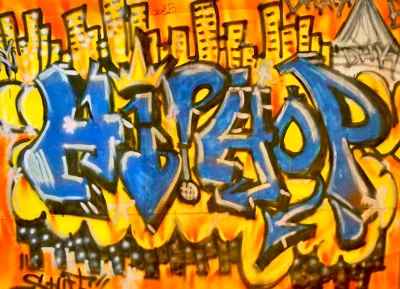
Our portfolio lists Next Level – Bangladesh, a documentary produced from November 2014 to January 2015 for UNC and the US State Department. Next Level is an initiative of the U.S. Department of State and the University of North Carolina at Chapel Hill: an international hip-hop arts and culture programme in which teams of American hip-hop artist-educators spend two to three weeks teaching and performing in host countries, using music and dance to promote cultural exchange, entrepreneurship and conflict prevention.
We have worked on more productions than are listed on this site, and you can see the selection in our portfolio. Our base is in India, where we have worked since 2010, and for each destination we assemble the team with trusted local partners, chosen for your project. For the Indian side of a regional shoot, see our page on working in India, and for the wider picture our where we work page.
How we work
Every production is run personally by our founder, who has more than 25 years of experience in film and television. We start with your brief, then research and scout before we quote, so that the schedule and budget rest on real information. Where you are based is a different question from where the shoot takes place, and we work with producers, broadcasters, agencies and brands around the world. The full process is on our how it works page. If your project includes a sponsor or brand, see sponsorship shoots, and for subtitles and transcription see post-production translation.
Next step
Tell us what you are making, when, and where in Bangladesh you want to film. We will say plainly what is feasible and what the permit route looks like for your project. Write to anshul@stand4productions.com, call or WhatsApp +91 98718 33930, or use the contact page.