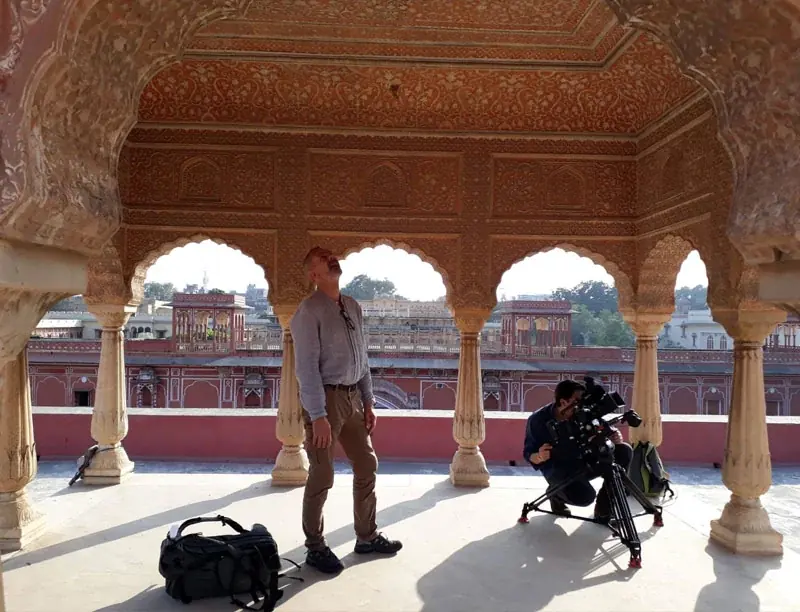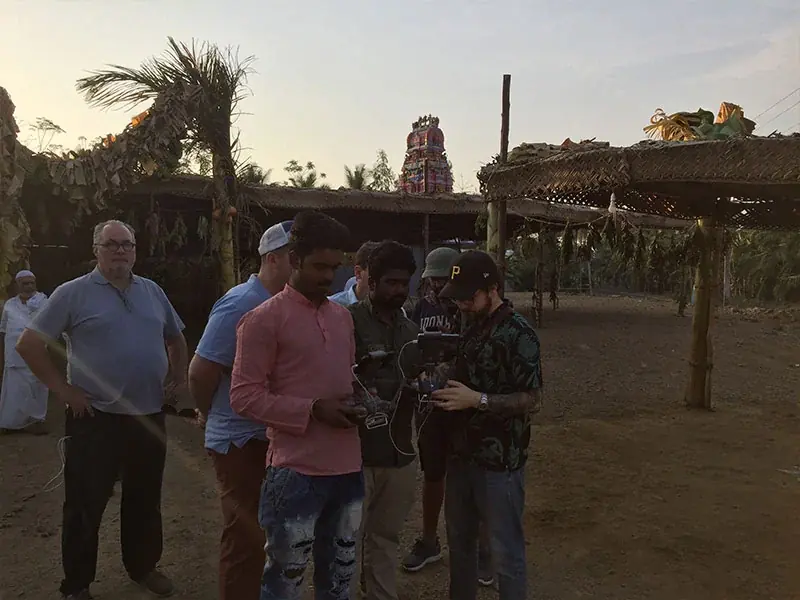
Film permission in India for a foreign crew is not one approval from one office. It is a chain: a national decision on whether and how you may shoot, a visa for each crew member, and then separate consent for every location, from a monument to a riverbank to a railway platform. Which national route applies depends on what you are making, and the rest depends on where you point the camera. This guide maps that chain so you can plan a schedule around it. It is a planning aid, not legal advice, and the rules change, so check the official sources linked below before you commit dates.
Who approves a foreign shoot in India?
For foreign productions, the national permission usually comes from one of two routes, depending on the format. According to the official India Cine Hub guidance, which sits under the Ministry of Information and Broadcasting, foreign feature films, TV and web series, and reality formats apply through India Cine Hub. Foreign documentaries, audiovisual commercials and music videos follow a different route, through the Ministry of External Affairs and the Indian mission in the country where the crew is based.
Two things surprise producers. First, the route is set by the production category, not by the size of the crew or the budget. Second, neither route replaces the local layer: central permission does not give you consent to film inside a specific monument, park or private property.
Which permission route fits your production?
Start by naming your format honestly, because the whole sequence follows from it. Here is the planning map we use when a new brief arrives.
| Production type | Typical national route | What to confirm |
|---|---|---|
| Feature film, TV or web series, reality format | India Cine Hub, then film visas | Eligibility, script and schedule submission, current process |
| Documentary | Ministry of External Affairs via the Indian mission in your country | Subject sensitivity, mission requirements, timing |
| Commercial or music video | Ministry of External Affairs via the Indian mission | Brand and usage description, crew list |
| Hybrid or branded content | Depends on how the project is described | Ask early, do not guess |
Hybrid projects are where mistakes happen. A travel series with a sponsor, a documentary funded by a brand, or a format that mixes real people with scripted scenes can be read in more than one way. Settle the category before you write the application, not after.
What does India Cine Hub do, and what does it not do?
India Cine Hub is the national single-window facilitation platform for eligible international productions. It handles the central permission to shoot. The official guidance says permission for non-restricted areas normally takes up to about three weeks, with protected or restricted areas taking longer, and that material changes to an approved script need fresh approval before those scenes are shot. Treat those as the published guide, not a promise: always read the current page.
What it does not do is arrange your locations, your crew, your equipment clearance or your on-the-ground access. Those sit with other bodies, which is the next layer.
What is the right order: permission, visa, then locations?
For routes that need a film visa, permission comes first and the visa second. The official visa guidance says the permission letter and team details then go to the Indian mission in the departure country. This is why one late letter can move every date behind it.
- Define the category and treatment. One clear paragraph of what you are filming and why.
- Shortlist locations by authority. Note who controls each place before you promise it to a commissioner.
- Apply for national permission through the route for your format.
- Apply for visas once the permission letter is in hand, with the category matched to the work each person will do.
- Secure location consents in parallel where possible, since many take weeks of their own.
- Clear equipment and drones with customs and airspace rules.
The official India Cine Hub guide for international projects and its film visa page are the sources to check, and its FAQ answers many timing questions.
If you would rather have one team own this sequence, our fixing and line production service prepares and tracks the applications alongside the schedule and budget.
Who controls the locations: state, city or site authority?
Location consent belongs to whoever controls the place, and that is rarely the central government. As a planning map, think in layers rather than a single list of offices.
- Protected monuments and heritage sites: typically a heritage authority, with its own fees and conditions.
- National parks and wildlife areas: forest and wildlife departments, often with their own approval steps and seasonal closures.
- Streets, ghats and public spaces: local police and municipal bodies, and sometimes a tourism or district office.
- Railway and metro spaces: the transport operator, with strict safety conditions.
- Temples and religious sites: the trust or management, plus community sensitivity.
- Private property: the owner, in writing.
State governments also run their own film promotion and facilitation arrangements, and what they offer differs from state to state. Ask for the current position in each state on your route rather than assuming one pattern holds nationwide.
How long does film permission in India take?
There is no single lead time. The subject, the nationalities in the crew, the locations and the equipment all change the sequence. The published guide gives about three weeks for non-restricted areas, but that figure covers only the central step. Add visa processing, location consents and customs clearance, and a prudent plan starts several months out for anything complex. We would rather tell a producer at the first call that a date is tight than discover it in week five.
Build your schedule backwards from the shoot dates, and leave a buffer after each approval before you book flights and non-refundable kit.
What about equipment, drones and special locations?
Professional kit entering India usually needs customs paperwork, often temporary import documents, and clearance takes time. Many visiting productions rent locally to avoid the delay; our crew and equipment hire page explains what can be sourced on the ground. Drones need their own check: India uses green, yellow and red airspace zones with different requirements, and a green zone does not remove every other condition. Have a qualified local operator verify the exact location and current rules before you plan aerial shots.
Border regions, sensitive installations and some protected areas can carry extra restrictions. If your story sits near one, raise it at the treatment stage, not at the recce.
Common mistakes when applying for film permission in India
- Choosing the wrong route because a hybrid project was described loosely.
- Booking flights before the permission and visa sequence is confirmed.
- Assuming central approval covers monuments, parks or private sites.
- Changing the script or scene list after approval without checking whether fresh approval is needed.
- Applying visas under a category that does not match the crew’s actual work.
- Leaving drone and customs questions to the last fortnight.
- Treating an old blog post, including this one, as current rules.
Frequently asked questions
Do foreign documentary crews need India Cine Hub?
According to the official guidance, foreign documentaries, commercials and music videos go through the Ministry of External Affairs route instead. Confirm this with the Indian mission in your country before applying.
Does central permission cover every location?
No. Local and site-level consent is separate and can take as long as the national step.
Can a local fixer apply on my behalf?
A fixer can prepare documents, track progress and advise on sequence, but the application route and who must sign depend on your category, so check what applies to you.
For wider context on timing, visas and costs, see our guide to filming in India, and see our portfolio for the productions we have run, including Pekin Express.
Next step: brief us before you fix a date
Send us the format, the treatment, the places you want and the dates you are considering, and we will tell you which route we expect to apply, which locations need the longest lead time and what to confirm before you book. See where we work for destinations beyond India. Contact Anshul Gupta at anshul@stand4productions.com, call or WhatsApp +91 98718 33930, or use the contact page.