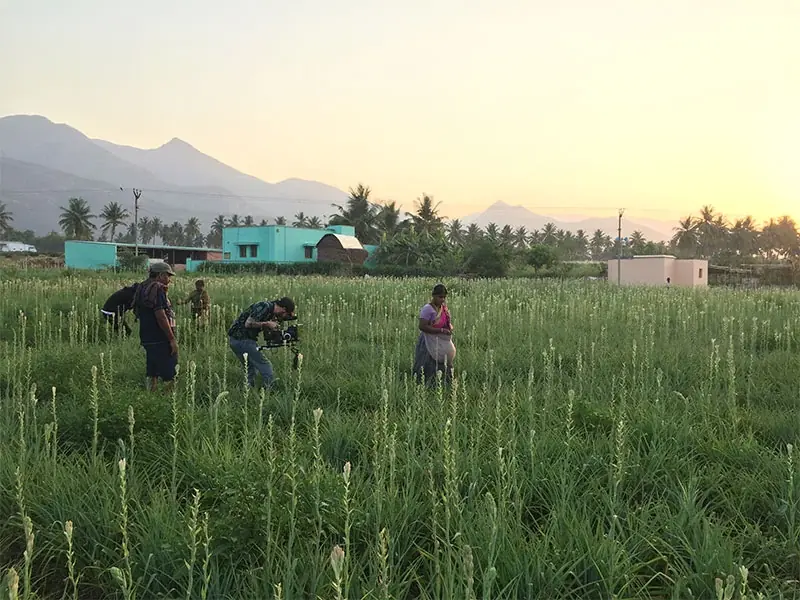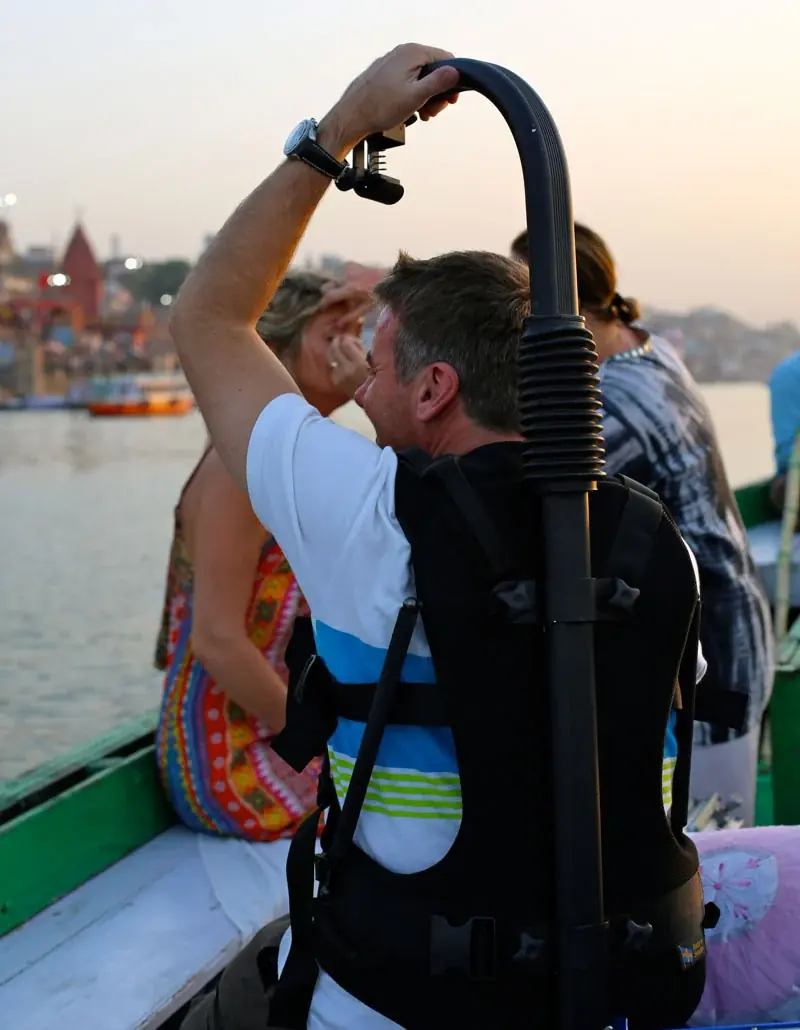
Remote direction means the director, and often the agency or client, follows a shoot from another country while a local team operates the cameras. Done well, it saves flights, time and carbon without handing creative control to strangers. Done badly, it produces footage nobody can use. This guide explains how remote direction works with a local camera team, what to set up before the shoot, and where the limits are.
Why producers choose remote direction
Travel is the obvious reason: visa timelines, cost, a short window or simply a diary that will not move. There are other reasons too. A brand may want local faces and local locations, but only needs a few days of footage. A broadcaster may have a presenter already on another continent. A documentary director may need to keep working on an edit while pick-up material is shot elsewhere. If you cannot be there, someone has to run the day, and the question is how to keep your judgement in the frame.
The roles that make it work
A remote shoot has more moving parts than a normal one, so each job needs an owner.
- The director holds the creative vision and watches the feed.
- A local producer or line producer runs the day: schedule, permissions, talent, transport and safety.
- A local director of photography or camera operator executes the visual plan.
- A relay person is the director’s voice on set. This is often the producer or a first assistant, so notes reach the camera operator without chaos.
- A technician looks after the streaming link, audio and backup.
One video call cannot do all of those jobs at once. Separating them is the single biggest quality control you have.
Before the shoot: the brief a remote crew needs
Write the brief as if the director will be unreachable for part of the day, because on a bad connection that will happen. A strong remote brief includes a shot list with priorities, reference images, a clear running order, a note on what can be dropped if time runs out, and the people with authority to approve changes. Share it early, and ask the local team to repeat it back to you in their own words. That one conversation catches most misunderstandings.
It also helps to hold a technical rehearsal. Test the live feed from the actual location or a similar one, check audio, and agree how notes will be passed. Our direction and camera support service starts with this kind of preparation, because a rehearsed link is much easier to trust.
Choosing the local crew
The crew matters more than the technology. Look for comparable work on a reel, a producer you can speak to directly, and equipment that matches your delivery requirements. If you are unsure, a short paid test shoot, such as an hour of interview and cutaways, tells you more than any showreel. Our crew and equipment hire team can match crew and kit to the brief, and our line producers make sure the days are planned around the shots that matter.
Connectivity and kit
The live feed is only as good as the network at the location. Plan for a primary and a backup connection, such as a hotspot, a bonded cellular device or a wired link where possible. Check upload speed on site at the same time of day you will be shooting. Decide in advance what happens if the link drops: does the crew continue to the shot list, or pause? Agree this before the day, not during it.
Record locally in the best quality your pipeline allows. The stream is a monitoring tool, not the master.
What a live feed cannot tell you
A compressed stream is good for framing, blocking and performance. It is not reliable for critical focus, exposure or colour. Rely on a monitored, calibrated image on set or, better, trust your director of photography and review the original files at the end of the day. Build that expectation into the schedule: end-of-day rushes review is part of the process, not an optional extra.
Approvals and sign-off
When an agency and a client are both watching, decisions get slow. Agree who can say yes on set, how many people can speak to the crew, and what the process is for last-minute requests. A common approach is one voice, the director, giving all notes to the relay person, with the client and agency talking to the director on a separate channel.
Language and culture
If the contributors, presenters or crew do not share your language, add an interpreter to the team. For interviews, a translator on set and a transcript afterwards saves editing time. Our post-production and translation support covers transcription and subtitles once the footage returns.
When remote direction is not the right choice
Be honest about the limits. Complex stunts, children, large crowds, delicate access situations or anything that depends on instant creative decisions benefit from the director being present. In those cases, consider a hybrid plan: the director attends the critical days in person and directs the others remotely.
An illustration of a remote shoot day
To make this concrete, here is a typical shape for a one-day remote interview shoot (an illustration, not a specific project). The day before, the director and the local producer walk the location by video, agree the camera positions and confirm the power and internet. On the morning, the technician tests the stream and sound while the crew sets up. The director joins ten minutes before the first take, hears a quick recap from the producer and confirms the order of interviews. During each interview, the relay person passes short notes between takes, never during them. At lunch the director reviews a few clips from the card, not the stream, to check focus and exposure. By the end of the day the footage is copied twice, labelled, and the producer sends a short report with anything that changed. Nothing here needs special technology; it needs discipline.
A simple checklist
- Roles named and written down
- Shot list with priorities and a drop list
- Technical rehearsal completed
- Backup connectivity in place
- Original files backed up on location
- Approval process agreed
- Daily rushes review scheduled
Talk to us about your shoot
If you need a camera team and a producer on the ground while you direct from elsewhere, tell us the destination, dates and what you need to capture. We will explain what is realistic and how we would run it.
To discuss a shoot, email anshul@stand4productions.com, call or WhatsApp +91 98718 33930, or send your brief through our contact page. We are based in India and work worldwide.